


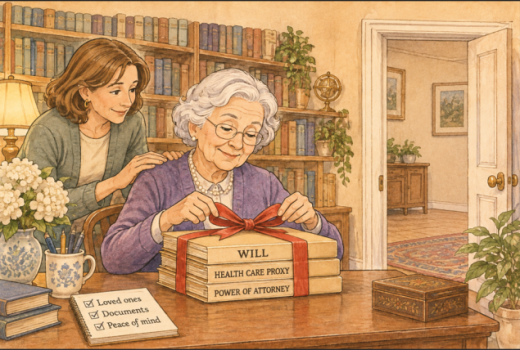
When we pass away we often leave our families with a mountain of paperwork and a ton (or more) of property they have to move, distribute, or more likely dispose of. No one is perfect, and even the most meticulous teetotaler cannot wrap up all their affairs once they have entered hospice. But if you learn your death is imminent there are still many things you and your family can do in the last week of your life to better ensure your post-mortem desires are fulfilled and your family’s lives are easier once you pass away.
The Agent’s Tasks
When you learn the end is near, your Agent under your Power of Attorney should be busy making changes that become much more difficult when you pass away:
- Emptying Safe Deposit Boxes: In many states, once you pass away getting access to your safe deposit box requires the Court’s permission, even if you had joint access to the box with someone else. Having your Agent or the co-owner empty your safe deposit box while you are alive avoids this problem (and ends the recurring fees you pay on the box).
- Forward Your Mail: Upon your death your family will have a very hard time forwarding your mail to their address until your Will is admitted to Probate. Consider having them pick up a Forwarding Address Form with the US Post Office or trying to accomplish this with you online.
- Name a Co-Trustee to Your Trust: Having a person named as a Co-Trustee during your lifetime avoids the additional times it takes for them to get appointed upon your passing, and allows them to access money for your immediately.
- Remove Valuables from Your Home: An online obituary alerts thieves to the fact that there may not be anyone living in your house for the next several months. Have your valuable items removed by someone you trust.
- Confirm Funeral Arrangements: Yes, this is a morbid topic to think about in the last few days of your life, but hospitals and hospice facilities do not hold onto your remains indefinitely, so having a plan in place can avoid creating unnecessary stress for your family.
- Provide Information Concerning Accounts and Family: If your family is small, make sure to create an informal family tree that identifies all of your family members starting from your grandparents and including your spouse and all of your children, parents, siblings, aunts, uncles and cousins. Probate requires identifying your next-of-kin, and if one side of your family does not know the other side of your family there can be many costs spent identifying and finding them (Private Investigators, Genealogists, and more).
Your Trusted Advisors’ Tasks
You can’t be expected to know everything, so make sure to have your Agent and family contact the following professionals ASAP (and I mean AS SOON AS POSSIBLE ASAP):
- Your Attorney: If you have any last-minute changes to your Estate Plan this is it. Also, this gives your lawyer a chance to make sure he didn’t make any mistakes on your documents that need to be changed right now. You will also want to let your attorney know the current contact information for your future Trustee, Executor and beneficiaries.
- Your Financial Planner: Your Financial Planner should be able to confirm several of your beneficiary designations on your retirement plans and life insurance policies, confirm if your accounts are owned by your Trust, and free up liquid funds for your immediate post-mortem needs. This may also allow for the payment of any outstanding investment loans that could cause problems going through the Probate process.
- Your Accountant: You may be surprised to learn that your income tax return is not just an exercise in placing random numbers on way too many sheets of paper. Your income and gift tax returns are a treasure trove of accounts, potential tax savings, and a necessity in preparing at least one final income tax return for you when you pass away.
The BIG Caveat
This is, of course, all moot if you are mentally incapacitated. In addition, if your demise is very quick (I.e., a few days) it is likely many of these last-minute tasks may not be accomplished. So, it is fair to say that after a certain age (generally sometime between 85 and 90) you may want to take these precautions even if you are perfectly healthy: We can all use a little bit of trustworthy help as we get older, and that help could make a huge difference in the time and money required to achieve your post-mortem desires after you have passed away.


